Why Natural Coffees May Appear Darker
Natural and anaerobically fermented coffees may appear darker or “overroasted” during roasting, even though they aren’t actually overroasted. This article explains why.
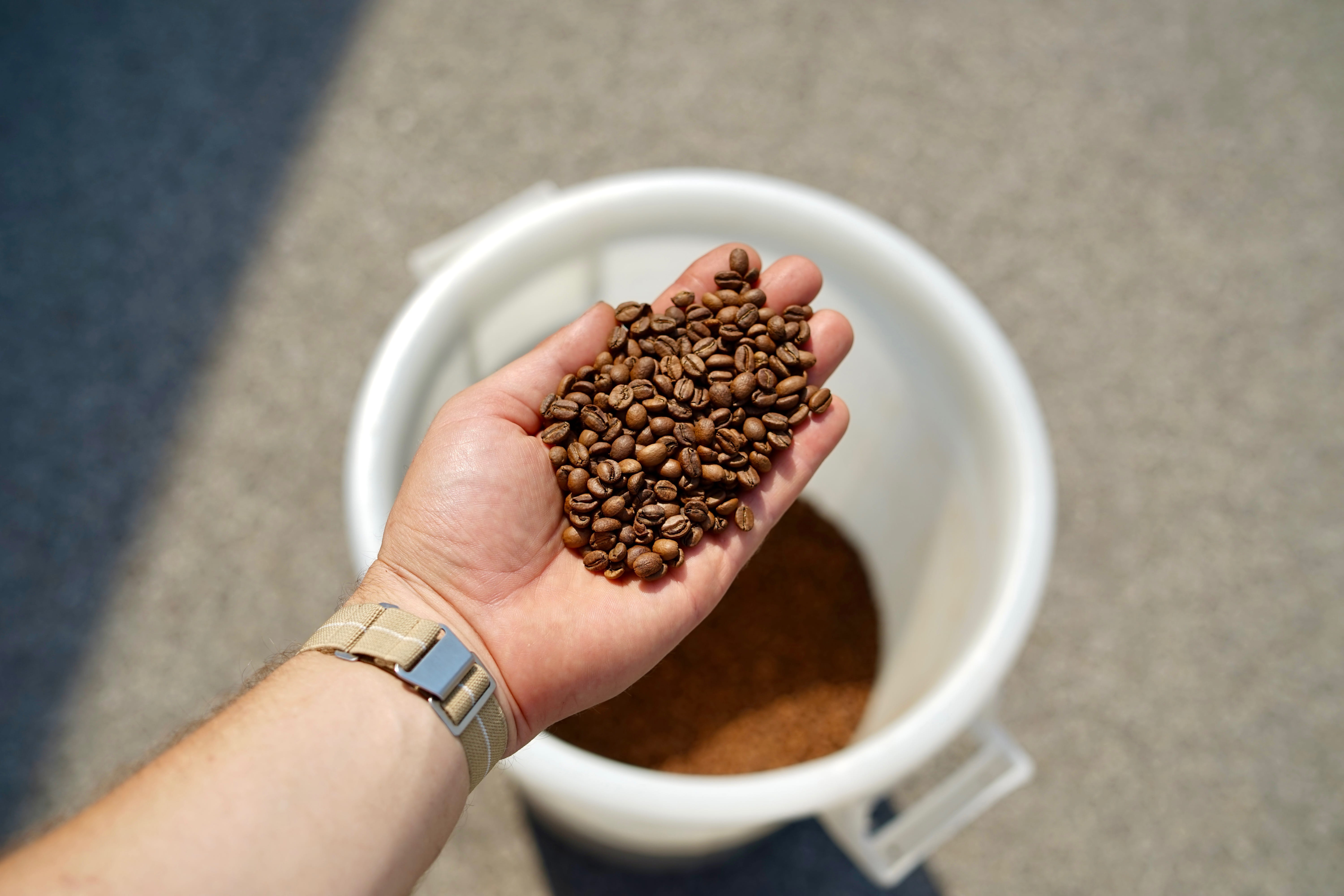
The coffee processing method has a significant impact not only on the final flavor but also on how the beans behave during roasting. This is most evident in naturally processed and experimentally fermented coffees, which can appear darker, burnt, or oily even though they were roasted just as lightly as washed coffees.
In naturally processed coffees (dry processing), whole coffee cherries are dried along with their skin and pulp. As a result, the beans remain in contact with the natural sugars contained in the fruit for an extended period of time. During drying, some of these sugars and other substances gradually penetrate the bean and subsequently react more intensely during roasting. This results in more pronounced caramelization, which can give natural coffees a darker surface or make them appear slightly oilier than washed coffees.
Natural coffees also tend to be less uniform. Differences during drying can result in variations in the density or size of individual beans, which then absorb heat at different rates. Consequently, a single batch may contain both lighter and darker beans, creating the impression of uneven or even over-roasted beans, even though this is a natural characteristic of this processing method.
The changes are even more pronounced in experimental processing methods, such as anaerobic fermentation. In this process, whole coffee cherries or hulled beans are fermented in sealed containers without access to oxygen. During this process, microorganisms convert sugars into organic acids, alcohols, and other substances, significantly altering the chemical composition of the bean even before roasting.
These changes have a direct impact on the roasting process. Fermented beans often change color more quickly than conventionally processed coffee, and their response to heat tends to be less predictable. If the roaster does not monitor the process closely enough, the beans may appear darker, have more pronounced discolored edges, or look unevenly roasted. In reality, however, this is not a sign of over-roasting, but rather a result of the beans’ altered chemical composition caused by fermentation.
The same applies to cupping. A perception of a burnt taste does not necessarily mean that the coffee was roasted too dark. Natural and anaerobically fermented coffees often combine high sweetness, pronounced acidity, a fuller body, and intense fruity or alcoholic notes. Our brains may subconsciously associate these striking flavor contrasts with a darker roast, even though they are actually a natural result of the chosen processing method.
Natural and anaerobically fermented coffees can therefore appear darker, oilier, or slightly burnt without actually being overroasted. This is because the resulting appearance and flavor are influenced not only by the roasting process itself, but primarily by the sugar content, chemical changes during fermentation, the structure of the bean, and how these factors affect our sensory perception.